
Brush hogging vs. forestry mulching: which does your field need?
The answer sits in the stems. Growth under two or three inches thick is brush hog work. Woody growth past that is forestry mulching work. One machine mows a field, the other resets it, and the price difference is large enough that knowing the line saves real money in both directions.
We run both, so this is not a sales pitch for either. Our brush hogging and forestry mulching estimates are free, and the walk tells us which side of the line your ground sits on.
What each machine actually does
A brush hog is a heavy rotary mower on the back of a tractor. It shears grass, weeds, briars, and soft brush, and leaves the cut material lying in the field to break down into the sod. It is fast, it is cheap, and on the growth it is built for, nothing beats it.
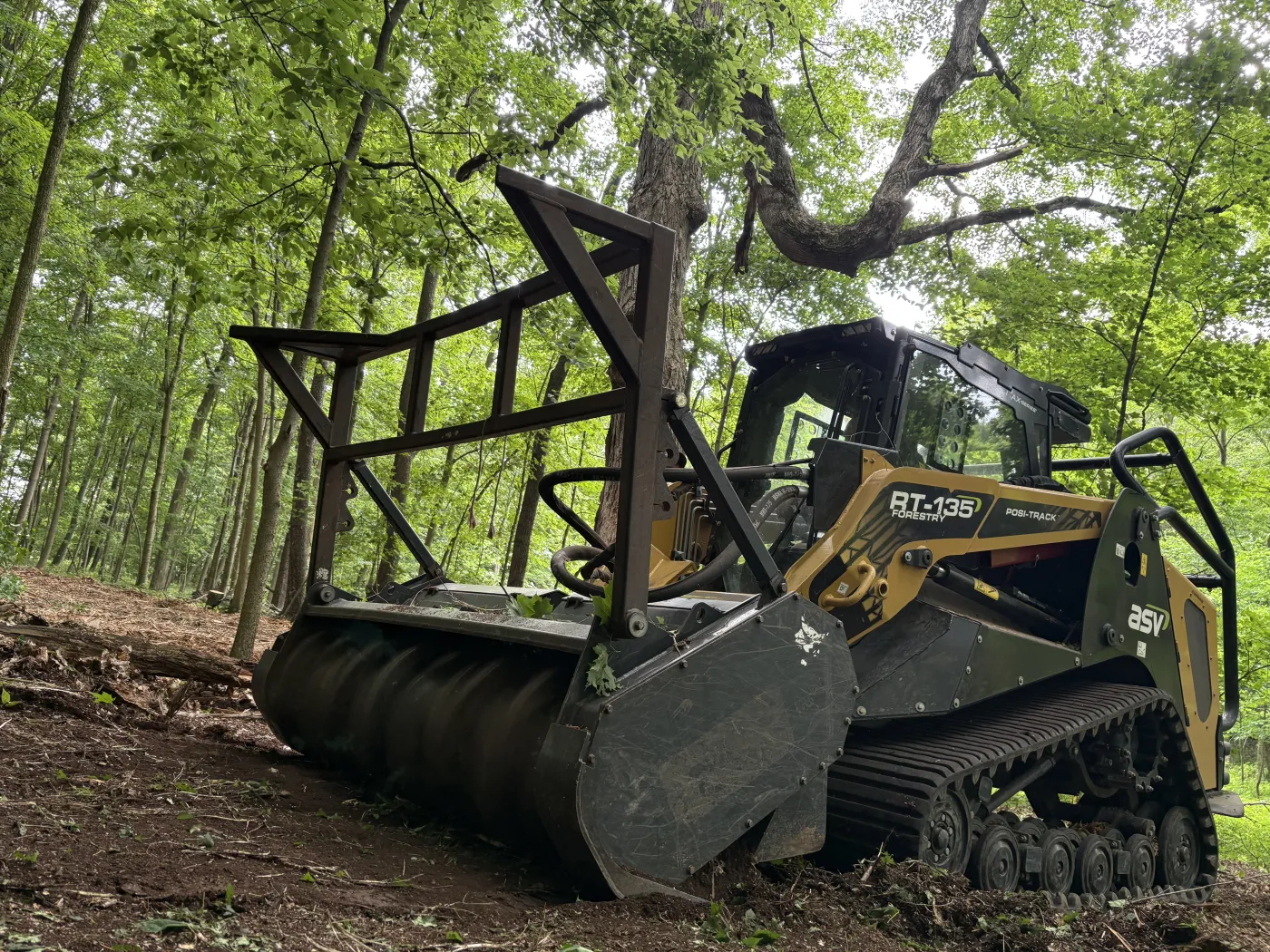
A forestry mulcher is a different animal: a tracked machine spinning a carbide-toothed drum that grinds standing brush and small trees into chips, working stem by stem. It takes growth a rotary cutter cannot touch, four, six, even eight inch stems, and leaves a mulch layer instead of cut stalks. Nothing gets hauled, nothing gets burned, and the stubble problem does not exist because the stems are gone to grade.
The price gap, and why it exists
| Brush hogging | Forestry mulching | |
|---|---|---|
| Typical Ohio cost | $70 to $120 per acre | $1,500 to $3,500 per acre |
| Handles stems | Under 2 to 3 inches | Up to 6 to 8 inches |
| Finish | Cut stalks on sod | Ground-level chip layer |
| Pace | Acres per hour | Half acre to 2 acres per day |
| Job type | Maintenance | Reset |
The gap is honest. Mulching runs a heavier machine slowly through harder material and removes the problem permanently at ground level. Mowing skims the top off a problem that regrows next season. Neither is the wrong choice, they are answers to different questions.
The expensive mistake in each direction
Paying for mulching when a field only needed mowing wastes money once. Brush hogging a field that needed mulching wastes money every year: the cutter shatters the woody stems it cannot shear, the field looks rough, the roots push back multiples of what was cut, and the real job is still waiting, a season thicker. We see fields that got mowed rough for three years straight and cost more in total than one mulching pass would have on day one.
The reverse mistake is quieter. Landowners who mulch a field and then never mow it are buying the expensive machine twice. The reset only stays cheap if the $100 mowing pass follows it every year after.
The sequence that works
For ground that has gone woody, the sequence is one forestry mulching reset, then annual brush hogging forever. The mulcher erases the accumulated growth and grinds the stems to grade. The brush hog keeps the regrowth soft and the field open at maintenance prices. That pairing is most of what keeps Ohio fields fields.
If you genuinely cannot tell which stage your ground is at, that is normal, the transition happens over two or three quiet summers. Send us a few photos or book the free walk, and we will put the honest machine on the quote.